
Vedic Traditions
Rudrabhishek at Your Wedding — What to Expect
May 31, 2026 By Pandit Deepak Pandey 5 mins read
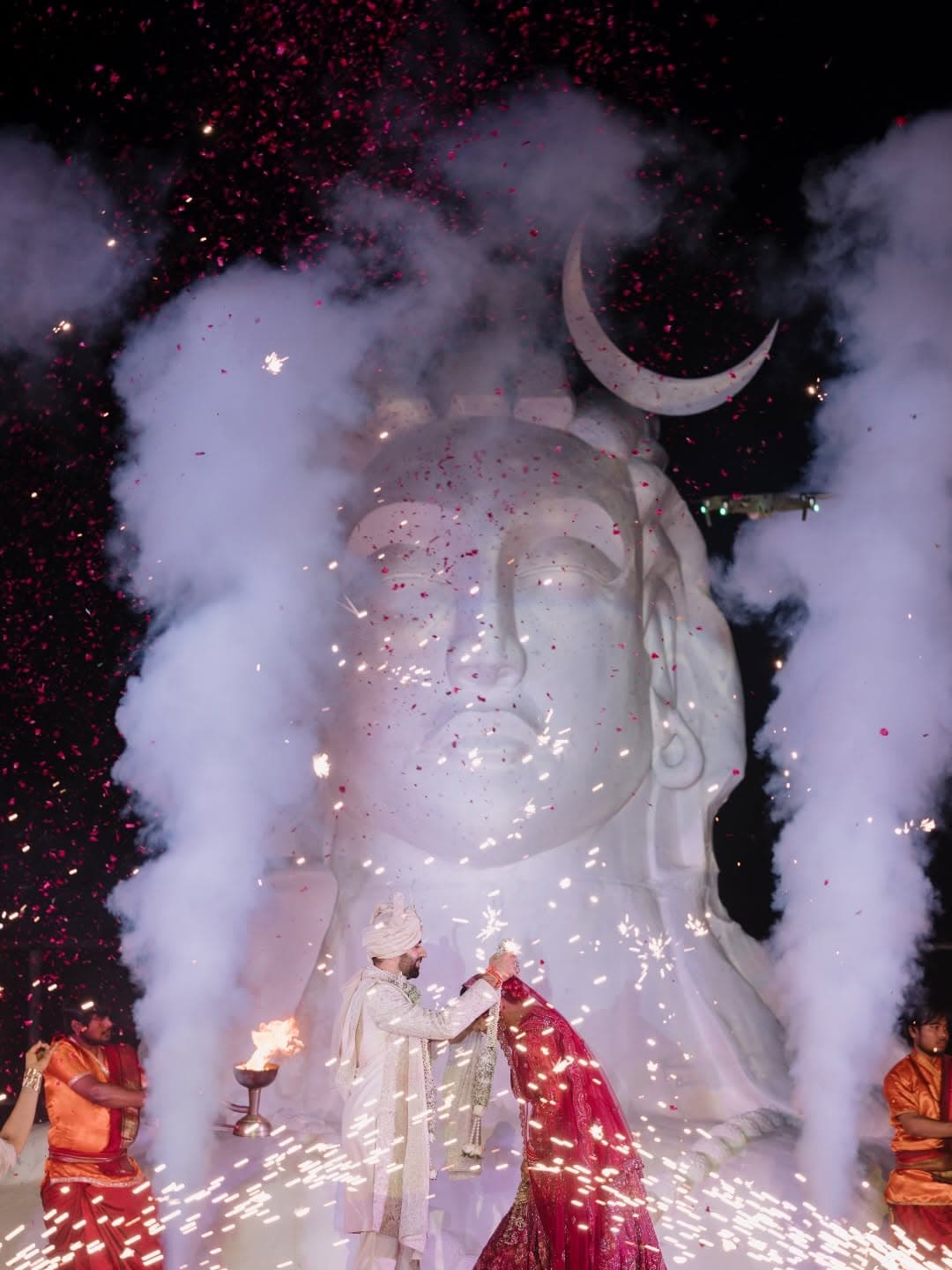
An Indian wedding is not merely a legal or social agreement; it is a sacred covenant, a "Sanskar" that binds two souls across lifetimes. In recent years, premium couples hosting destination weddings are seeking ways to ground their celebrations in authentic Vedic spirituality. Among the most popular options is scheduling a Rudrabhishek for wedding ceremony programs.
But what exactly is the Rudrabhishek puja, why is it conducted during weddings, and what should you and your family expect on the day? In this comprehensive guide, we walk you through the spiritual science and layout of this ancient ritual.
What is Rudrabhishek?
Rudrabhishek is a highly revered ritual dedicated to Lord Shiva, specifically in His powerful, energetic form as Rudra. "Abhishek" means to bathe or consecrate. During the ritual, a consecrated Shivalingam is bathed with sacred liquids—including fresh milk, organic honey, sugarcane juice, ghee, curd, and holy Ganges water (Gangajal)—while a group of trained Vedic scholars recites the "Sri Rudram" from the Krishna Yajurveda.
According to ancient scriptures, Lord Shiva is "Abhishek Priya" (one who loves consecration). Performing this ritual is believed to invoke Lord Shiva's immense grace, bringing peace, prosperity, and wiping away past negative karma.
Why Perform Rudrabhishek at a Wedding?
Starting a married life involves entering the "Grihastha Ashram" (the householder phase of life). It requires emotional, physical, and financial alignment. Conducting a Rudrabhishek for wedding ceremony settings offers three key benefits:
- Astrological Purification: Lord Shiva is the controller of planets and time (Mahakaal). The chants neutralize planetary afflictions (especially Mangal or Shani doshas) in the couples' charts.
- Conquering Obstacles: The powerful phonetic resonance of Sri Rudram serves as a spiritual shield, removing obstacles and misunderstandings, ensuring that the wedding rituals proceed smoothly.
- Purifying the Venue: Large event locations hold mixed energy from preceding gatherings. A havan or abhishek clears out negative vibrations, wrapping the resort or hall in a sattvik (pure) aura.
What to Expect: Timeline and Preparation
If you decide to book our Vedic team for your wedding, here is the chronological workflow of the ceremony:
1. Setup & Altar Design (1 Hour Before)
Our priests arrive at the venue to arrange the sacred altar. We build a clean 10x10 feet space, install a brass platform (chowki) for the Shivalingam, organize the puja samagri, and set up incense burners. The altar is decorated with fresh marigold flowers and mango leaves.
Our priests arrive at the venue to arrange the sacred altar. We build a clean 10x10 feet space, install a brass platform (chowki) for the Shivalingam, organize the puja samagri, and set up incense burners. The altar is decorated with fresh marigold flowers and mango leaves.
2. Ganesh & Gauri Puja (First 20 Mins)
Any Hindu ceremony begins by invoking Lord Ganesha, the remover of obstacles, and Goddess Gauri, the symbol of marital devotion. The bride and groom sit together to tie sacred threads (raksha sutra) and offer prayers.
Any Hindu ceremony begins by invoking Lord Ganesha, the remover of obstacles, and Goddess Gauri, the symbol of marital devotion. The bride and groom sit together to tie sacred threads (raksha sutra) and offer prayers.
3. Core Abhishek & Yajurveda Chants (1 Hour)
This is the heart of the ceremony. While our scholars chant the eleven sections of Namakam and Chamakam (Sri Rudram), the couple pours the five sacred liquids (Panchamrit) over the Shivalingam. The chanting is done in high-pitch unison, filling the hall with resonance.
This is the heart of the ceremony. While our scholars chant the eleven sections of Namakam and Chamakam (Sri Rudram), the couple pours the five sacred liquids (Panchamrit) over the Shivalingam. The chanting is done in high-pitch unison, filling the hall with resonance.
4. Havan Ceremony (30 Mins)
After the liquid offering, a small sacred fire pit (Havan Kund) is lit. The couple offers herbal materials into the fire to invoke Agni Devta as the witness to their devotion.
After the liquid offering, a small sacred fire pit (Havan Kund) is lit. The couple offers herbal materials into the fire to invoke Agni Devta as the witness to their devotion.
5. Maha Aarti & Blessings (15 Mins)
The ritual concludes with the singing of the Shiva Aarti and Ganga Aarti, blowing conch shells, and offering the holy gangajal as prasad. Our scholars present a special wedding blessing (Mantra Pushpanjali) to the couple.
The ritual concludes with the singing of the Shiva Aarti and Ganga Aarti, blowing conch shells, and offering the holy gangajal as prasad. Our scholars present a special wedding blessing (Mantra Pushpanjali) to the couple.
What Do the Hosts Need to Arrange?
To ensure the ritual proceeds without delays, we advise the host family to coordinate with their wedding planner to arrange the following local items:
- Local Samagri: Raw milk (5-10 liters), curd, honey, sugar, ghee, fresh coconuts, betel leaves, and seasonal fruits.
- Floral items: 5-10 flower garlands, loose rose and marigold petals, and bilva leaves (Bel Patra) which are highly dear to Lord Shiva.
- Seating Arrangement: Low wooden stools (patli/chowki) for the couple, and clean floor mats/carpets for the family members to sit on.
Adding a Rudrabhishek puja to your wedding schedule provides a peaceful, meditative sanctuary amidst the busy wedding celebrations, inviting divine harmony as you begin your shared journey.